The Best Time to Visit Mauritius: The Cyclone Season Has Official Dates, and October Is the Driest Month
Updated September 18, 2026 · 8 min read
Most advice about when to visit this island is written in adjectives. The Mauritius Meteorological Services publishes numbers instead, and they settle the question more cleanly than any brochure — including one date that a lot of travel writing gets wrong.
Two seasons, and two months that belong to neither
The meteorological service defines the year as a warm humid summer extending from November to April and a relatively cool dry winter from June to September.
Read that twice. May and October are not in either season. They are the transitions, and as it turns out that is where the useful answer lives.
The temperatures behind those definitions:
| Figure | |
|---|---|
| Mean summer temperature | 24.7 °C |
| Mean winter temperature | 20.4 °C |
| Warmest months | January and February, average day maximum 29.2 °C |
| Coolest months | July and August, average night minimum 16.4 °C |
A 4.3-degree gap between the mean summer and mean winter temperature is small. Nobody comes to Mauritius and finds it cold. What separates the seasons here is not heat — it is water falling out of the sky, and the possibility of a cyclone.
The cyclone season has a definition, not a reputation
The cyclonic season covers the period between the 1st of November and the 15th of May. That is the official span, and it is worth knowing precisely, because it does not line up with the summer months and it ends in the middle of a month rather than at the end of one.
What a warning actually means is also defined, and the lead times are shorter than people expect:
| Class | When it is issued |
|---|---|
| I | not less than 36 and not more than 48 hours before gusts of 120 km/h |
| II | so as to allow, as far as practicable, 12 hours of daylight before gusts of 120 km/h |
| III | so as to allow, as far as practicable, 6 hours of daylight before gusts of 120 km/h |
| IV | when gusts of 120 km/h are recorded in some places and are expected to continue |
Class I is a day and a half of notice. By class III you have a morning.
This is not abstract for a visitor with tours booked. The Le Morne Heritage Trust Fund closes its hiking trail from cyclone warning class II — and also on a heavy or torrential rain warning, and after landslides. Boat operators cancel on their own judgement well before that. A cyclone does not have to reach you to remove three days from a week.
The honest framing: a cyclone in any given fortnight is unlikely, and the season is six and a half months long. But if you are booking a single week in February with non-refundable excursions, you are accepting a risk that a week in September simply does not carry.
Rain is the real dividing line
| Figure | |
|---|---|
| Mean annual rainfall (1971–2000) | 2,010 mm |
| Mean summer rainfall | 1,344 mm — 67 % of the annual total |
| Mean winter rainfall | 666 mm |
| Wettest months | February and March |
| Driest month | October |
Two-thirds of the island’s rain falls in the six summer months. February and March are the wettest, which puts them inside the cyclone season and at the top of the rainfall chart at the same time — the two worst columns of the year landing on the same two months.
And October is the driest month of the year. It also sits outside the cyclone season by three weeks. If one fact from this article is worth carrying, it is that one.
What is actually seasonal about the activities
Weather is only half of it. Some of what people come for has a calendar of its own.
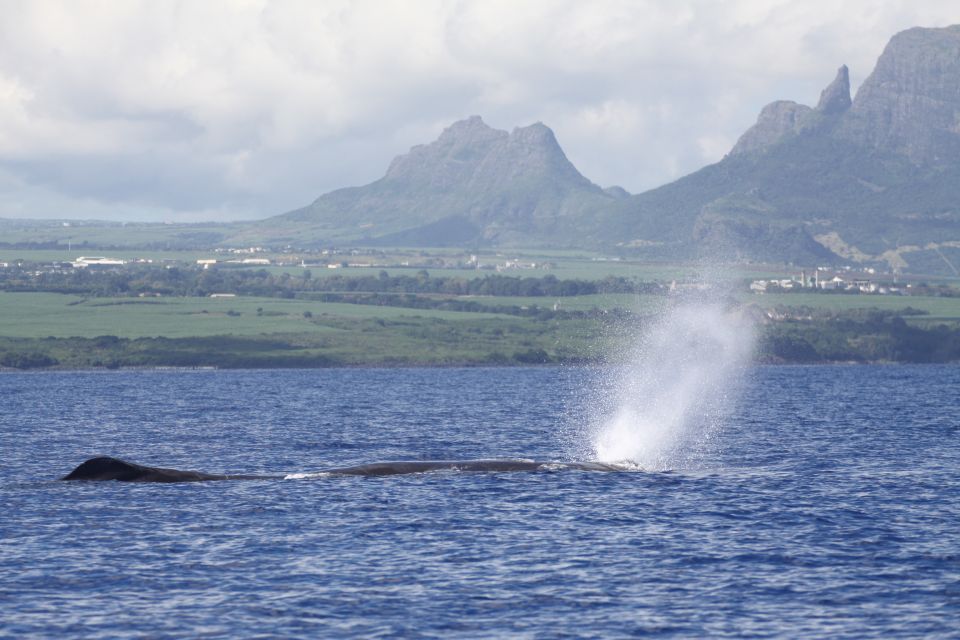
Whales have a season; dolphins do not. The Black River dolphin swim and whale watching tour — €110, five hours, 4.6 stars from 713 reviews — states it plainly on its own booking page: humpback whales between June and October, and resident sperm whales all year round. The same page gives a 60 % chance of seeing whales and says whale watching is from the boat only, swimming is not allowed.
That is not the operator being cautious. Swimming with a whale is an offence under the Tourism Authority regulations, which is a separate matter from the season and applies in every month of the year — one of several things the dolphin rules decide for you regardless of when you come.
The island has dolphins all year — you can only book them in the morning. The regulations stop boats going out for it after noon. That is a daily constraint, not a seasonal one, and it means an afternoon arrival costs you a day rather than a month.
Winter shortens the opening hours. Chamarel closes at 5pm from June to September and at 5.30pm from October to May. Half an hour sounds trivial until you notice that the shorter hours land exactly in the European summer holidays, when most visitors actually come.
So which months
October. Driest month of the year, outside the cyclone season, still inside the humpback whale window, and the transition out of winter rather than into it. It is the single best-supported answer the published figures give.
Mid-May to September if the priority is avoiding cyclone risk entirely — the season ends on 15 May and does not start again until 1 November. Cooler, and the coolest nights are 16.4 °C, which is a jumper in the evening and nothing more. Winter is also the dry half: 666 mm against 1,344.
November to April if you want the warmest water and the longest evenings and you accept the trade. Book flexible cancellation on the excursions, and do not stack everything you care about into the last two days.
February and March are the ones to argue about. Wettest months of the year, deep inside the cyclone season. People have wonderful holidays in February, but it is the month where a plan needs a fallback, and the island offers those: the culture and food side of it does not care about rain, and neither does a market in Port Louis.
One thing the calendar does not change: the lagoon is a lagoon in every month, and what you may do in it is set by regulation rather than weather. If you are choosing between a catamaran day in July and one in January, the rules on board will be identical. Only the odds of the day being cancelled differ — and that, unlike almost everything else in this decision, is a number you can look up.