Wildlife Parks in Mauritius: Three Very Different Visits, and the Cut-Off Times Nobody Mentions
Updated September 18, 2026 · 7 min read
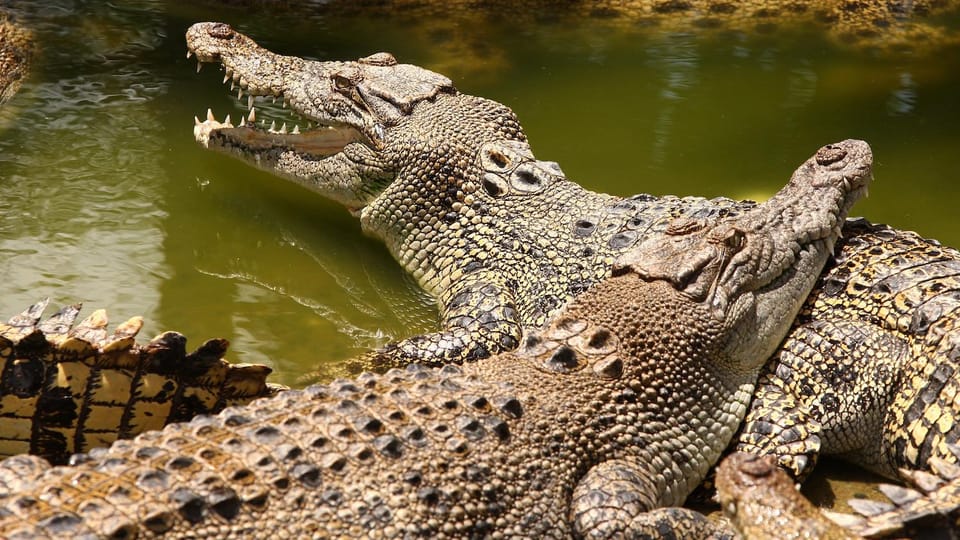
Three places on this island put you close to animals, and the booking descriptions make them sound like the same afternoon. They are not. One is an attraction park you walk around at your own pace, one is a self-guided reserve in the south, and the third is a nature reserve you are not allowed to enter without a guide.
The differences that matter are all times of day, and none of them are in the tour listing.
La Vanille: two prices, and you should read the one that applies to you
La Vanille Nature Park at Rivière des Anguilles is the crocodile and giant tortoise park in the south. It publishes its rates openly, and the gap in them is the first thing to notice:
| Adult | Child (3–12) | |
|---|---|---|
| Non-resident | Rs 975 | Rs 685 |
| Resident | Rs 450 | Rs 295 |
A visiting family of four pays Rs 3,320 at the gate. That is not a surcharge invented for tourists — a two-tier rate is normal at Mauritian sites, and Pamplemousses does the same thing — but it is the number to budget with, and the lower one is the one that tends to circulate.
The park is open Monday to Sunday, 9am to 5pm, including public holidays, and closed on 25 December and 1 January. The sentence that changes a plan is a different one: arrive before 3pm for the full experience. The park is fully self-guided, so nobody will hurry you along, but the scheduled feeding sessions and the animal encounters run to the park’s clock, not yours.
Two hours is the honest minimum here. An eight-hour southern tour that includes La Vanille and Le Morne beach costs €109 and rates 4.6 from 88 reviews; the version that pairs the crocodile park with the coloured earth at Chamarel is €138 over eight hours and has 242 reviews at 4.5 — of the day tours built around an animal park, that is the longest track record we have. Both are long days, and both put La Vanille after something else. Ask where it sits in the running order.
Casela: the animals stop at half past three
Casela Nature Parks sits on the west coast above Cascavelle and is the one most people mean when they say “the safari park”. Opening hours are 9am to 5pm, Monday to Sunday, open on public holidays and closed on 25 December and 1 January.
The detail worth carrying with you comes from the park’s own FAQ: animal interaction activities end at 3.30pm. Not the park — the animal activities. Arrive at two, and the part you came for has ninety minutes left in it.
Two more rules from the same page, both easy to trip over with a family: minors under 18 must be accompanied by a parent or adult guardian, and for certain activities a parent or guardian has to fill in and sign an authorisation form before the child takes part. That is a signature at the counter, not a formality you can delegate to a driver waiting outside.
One warning about the price you may have seen. Casela advertises a Wild Weekend rate of Rs 800 for adults and Rs 650 for children aged 4 to 12, on Fridays, Saturdays and Sundays throughout September 2026, from the 1st to the 30th. It is available exclusively at the Casela ticket counter and only for Mauritians and residents. If you are visiting, it is not your price, and the park says so on the same line it advertises it.
For visitors the sensible comparison is between the packaged days. A day combining Casela with Flic en Flac beach runs eight hours at €100 with 4.6 stars from 73 reviews. The entrance ticket with private transfer is €222 for seven hours and includes the ticket itself, the African safari truck tour, the Tulawaka coaster and the aviary — but it carries 17 reviews at 3.9, against 73 at 4.6 for the cheaper one. Twice the price for a thinner record is a hard case to make.
Île aux Aigrettes: you cannot simply turn up
This one is a different category of thing, and the reason is worth a paragraph.
Île aux Aigrettes is a 26-hectare island about 850 metres off the south-east coast in Mahébourg Bay, and unlike the volcanic mainland it is made of coralline limestone. The Mauritian Wildlife Foundation describes it as holding the last remnants of the dry coastal forest that once covered most of Mauritius. It was declared a nature reserve in 1965, and the forest you walk through now is the result of clearing introduced species and reintroducing rare ones that had disappeared from the island.
You visit it on the Foundation’s Ecotour: a guided trail lasting roughly 1.5 to 2 hours, with a short boat crossing each way. Tailor-made tours — photography, birdwatching — can be arranged in advance. The booking office is on the mainland at Pointe Jérôme, near Mahébourg. There is no version of this where you take your own boat across and wander.
That guided-only structure is the point rather than a restriction: it is a restoration site, and the numbers on it are small. Day tours that build around it exist — a full day including the reserve at €106 with 4.2 from 86 reviews, and a version paired with the Blue Bay glass-bottom boat at €124 — and both are in the same corner of the island as Blue Bay Marine Park, which is what makes that pairing sensible rather than greedy.
Where the tortoises actually are
Giant tortoises turn up at all three sites and at Chamarel, and it is worth being clear that these are Aldabra tortoises, brought in from the Seychelles. The Mauritian species were driven to extinction; what you are looking at is a substitute that fills the same ecological role, which is precisely why conservation projects here use them.
If tortoises are the reason for the trip, La Vanille is the one built around them. If it is birds and African animals, Casela. If it is the island’s own ecology, Île aux Aigrettes — and that one asks for a booking, not a ticket.
The plan this all adds up to
Our wildlife park pages list 39 offers from €17.43, and the cheapest of them is a plain entrance ticket rather than a day out. The mistake this article exists to prevent is simpler than the price question:
Two cut-offs decide the day. La Vanille asks you to be in before 3pm. Casela stops its animal activities at 3.30pm. Almost every southern or western full-day tour also visits Chamarel or a beach, and if the park is the second or third stop, you arrive inside the window with very little of it left.
So ask one question before booking a combined day: what time do we reach the park? If the answer is after two o’clock, either the park is the wrong stop for that tour, or that tour is the wrong way to see the park. A taxi and an early arrival will beat it comfortably — as will the rest of the land-based day trips that only do one thing.
And if what you actually want is the island’s landscape rather than its animals, that is a different day: the sites, the fees and the hours covers the coloured earth, the mountain and the gorges, none of which close their gates at half past three.