Snorkelling Blue Bay Marine Park: Where You May Swim, and Where You May Not
Updated September 18, 2026 · 7 min read
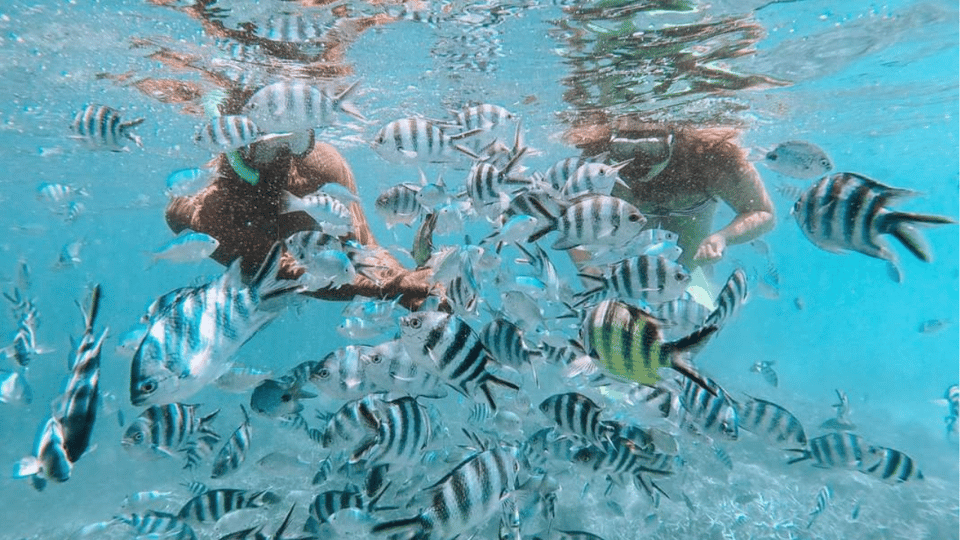
Blue Bay is the stretch of Mauritian lagoon where what you may do in the water is written down — a marine park with its zones drawn by law, and the public beach sits right beside it.
The bay was designated a Marine Park in June 2000 under the Fisheries and Marine Resources Act 1998. It covers 353 hectares, runs from Pointe Corps de Garde in the north to Pointe Vacoas in the south, and extends about a kilometre seaward of the reef crest. Since 2008 it has also been a Ramsar wetland of international importance.
Getting into the water is free. Understanding the zones is what makes the difference between a good hour and being shouted at from a boat.
The zones, and what each one forbids
The Fisheries and Marine Resources (Marine Protected Areas) Regulations 2001 divide a marine park into named zones and attach a different rule to each. The ones a visitor meets:
| Zone | What it means for you |
|---|---|
| Swimming zone | marked seaward by yellow floats; the only place in the park where you may swim |
| Traffic lane | the channel boats use; no swimming, snorkelling or diving |
| Ski lane | water skiing only, by permit and on a schedule; no swimming while skiing is on |
| Conservation zone | permit required to enter; boats at no more than 3 knots and no wash |
| Strict conservation zone | permit required; normally no craft at all |
| Mooring zone | the only place a boat may drop anchor; white mooring buoys |
Two of those are worth spelling out, because they are the ones people break without knowing.
“No person shall, in a marine protected area, swim elsewhere than in a swimming zone.” That is the text. Inside the park, the yellow floats are not a suggestion about where it is nice to swim — they mark the area where swimming is permitted at all.
No craft of any kind may operate inside a swimming zone — and the regulation names kayaks, pedalos and surfboards alongside motorboats. So the paddle craft you can hire down the beach belong outside the floats, in the water where the boats are.
Why the good coral needs a boat with a permit
The reef that Blue Bay is famous for sits in a strict conservation zone, and the regulations make one specific exception for it: within strict conservation zone A, a glass-bottom boat, or a boat carrying snorkellers or divers, may be used for snorkelling or diving in that zone — and the Permanent Secretary may set the hours during which that is allowed.
That single clause is the reason the €24 boat trip exists. A glass-bottom boat visit with snorkelling runs one hour at €24, rating 4.4 stars from 267 reviews — in our inventory the cheapest way into the part of the park you cannot legally swim to from the sand. Entry to the park costs nothing; the boat is what you are paying for, and the permit it carries is what you are actually buying.
The rest of the same regulations shape how that hour goes. A boat with people in the water must fly the A-flag. It may not stay on a mooring buoy placed for dive boats for more than 90 continuous minutes — how long an operator makes its trip is up to the operator; at the buoy it ends after ninety minutes. It may not anchor outside a mooring zone, may not exceed three knots in the conservation zones, and may not empty a toilet or a bilge tank inside the park.
The penalties do not sit with the operator alone. The regulations say “any person” throughout, and the range rises with each conviction: Rs 2,000 to Rs 20,000 on a first, Rs 20,000 to Rs 35,000 and up to six months on a second, Rs 35,000 to Rs 50,000 and up to two years on a third. Swim outside the yellow buoys and you fall under it yourself.
What the longer trips add
An hour on a glass-bottom boat is an introduction. Two other shapes of day exist:
- A half-day snorkelling trip with a Creole picnic lunch, four hours at €60 with 4.6 stars from 289 reviews. It leaves from the same beach — the meeting point is the stand with the grey parasol opposite the Blue Bay car park — calls at two snorkelling spots instead of one, and brings the Creole picnic along. The extra three hours buy two stops and a lunch, not a different place.
- A sea turtle and coral reef trip at the other end of the island off Grand Baie, 90 minutes at €39.48. Different water, no marine park, turtles rather than a reef wall.
Across the island our snorkelling pages hold 74 offers, from €24, median €72.80, with 16,139 reviews between them — the median is high because most of them are full-day island cruises with a snorkel stop attached, not snorkelling trips. If snorkelling is the actual purpose of the outing, the cheap end of that range is where to look.
Two honest caveats
Fish feeding happens, and it is why the shoals are so dense. Sergeant-majors gather around boats here because people arrive with bread. The dolphin regulations forbid feeding dolphins and whales in plain words; the marine park regulations we read do not say anything about hand-feeding reef fish, so nobody is breaking a rule when the bread comes out. Whether it is good for the reef is a question the operators answer differently — and one you can settle for yourself by keeping your hands empty.
Blue Bay is not deserted and not wild. It is a public beach with a car park, in a built-up corner of the south-east coast, and on a Sunday it belongs to Mauritian families, which is a good reason to go and a bad day for quiet water.
For fish in numbers, in a protected reef, at the price of a lunch, it is still the best value in the water in our inventory — and cheaper than the dolphin boats on the other coast, which are bound by rules of their own. If you would rather swim where no line of buoys sets the limits, the island boat trips off the east coast and the water sports operators on the beaches are where to find it: the zone rules on this page apply only inside a marine protected area. The dolphin regulations apply everywhere.